
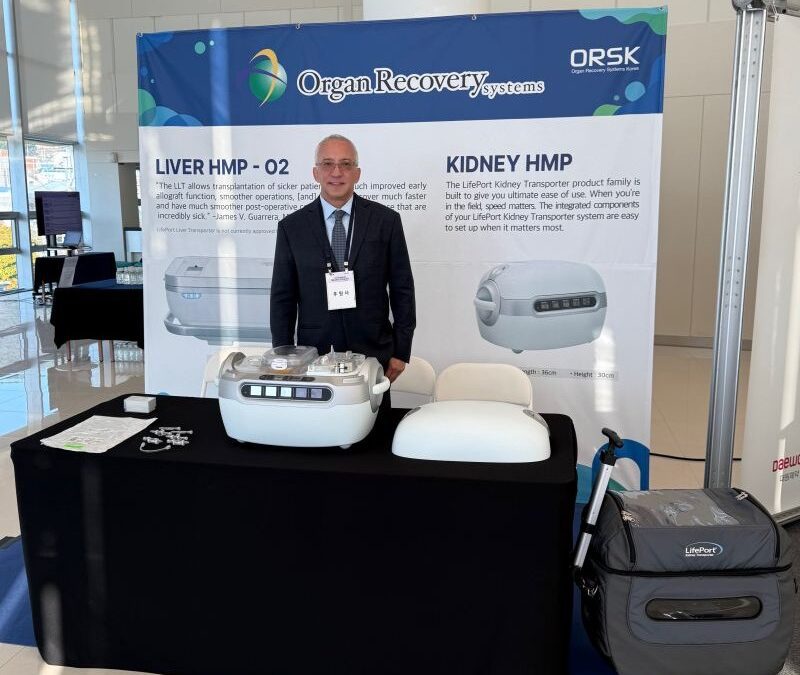
In March, Organ Recovery Systems’ (ORS) Christopher Laycock, Managing Director of Sales in Asia Pacific and Latin America, attended the Korean Society of Transplantation annual meeting at the Yeosu Expo Convention Center in South Korea.
The spring academic conference provides an exchange for professionals in transplant medicine, and a place to reflect on challenges facing the rapidly changing medical environment. The main topics of discussion included the policy session “Strategies to Promote DCD to Address Organ Shortages” and an ethics session titled “Protecting the Safety and Autonomy of Living Organ Donors.”
ORS had the privilege of attending the conference, with a booth to showcase our LifePort preservation technologies. On display was LifePort Kidney Transporter, with Christopher on hand to answer any questions and educate attendees.
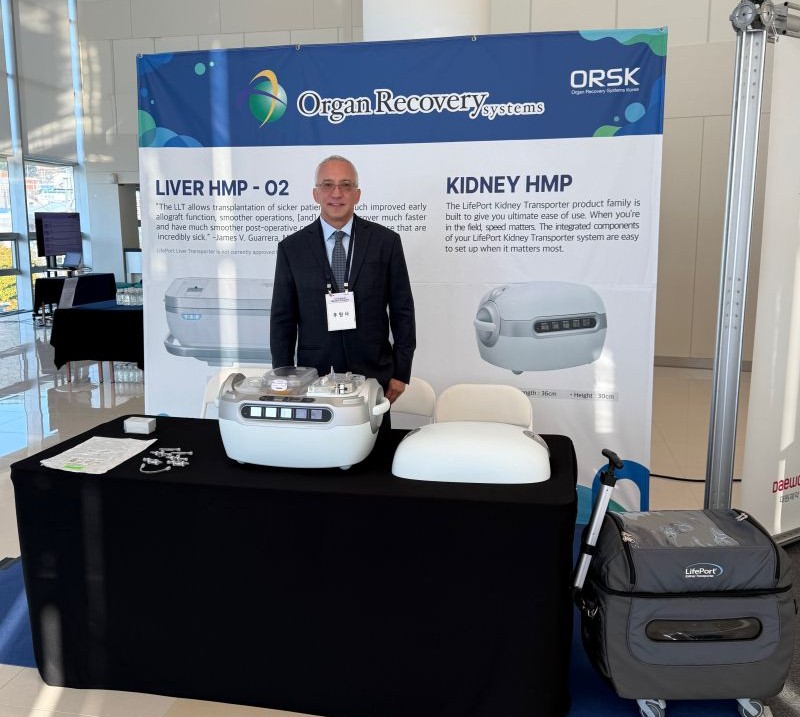
Upon return from the spring conference, Christopher reflected on his experience and the future of transplantation in South Korea:
“This week I had the opportunity to attend the Korean Society of Transplant meetings and connect with colleagues who are deeply committed to advancing organ transplantation in South Korea. One of the most exciting and important topics discussed was Korea’s movement toward incorporating donation after circulatory death (DCD) donors into their transplant system.
For many transplant programs around the world, DCD has become an essential strategy to expand the donor pool. By allowing organ recovery after circulatory death—rather than relying solely on traditional brain-death donors—countries can significantly increase the number of organs available for patients waiting on the transplant list. As Korea continues to develop its protocols and infrastructure for DCD, the potential to save more lives through transplantation will grow substantially.
Of course, the expansion of DCD donation also introduces new clinical challenges. Kidneys from DCD donors often experience longer warm ischemia times, which can increase the risk of delayed graft function and impact early transplant outcomes. That’s why preservation and assessment technologies play such a critical role in making DCD programs successful.
This is where machine perfusion technology, such as LifePort Kidney Transporter, becomes incredibly valuable. By perfusing the kidney with preservation solution in a controlled, hypothermic environment, LifePort technology helps maintain organ quality during transport and allows transplant teams to better evaluate organ viability before implantation.
For DCD kidneys in particular, hypothermic machine perfusion has been shown to improve preservation, reduce the risk of delayed graft function, and ultimately increase the likelihood that recovered organs will be transplanted rather than discarded. As Korea begins integrating DCD donors into their system, tools like LifePort can help transplant centers confidently utilize these kidneys and maximize the number of transplants performed.
It’s inspiring to see the dedication and innovation within the Korean transplant community. Expanding the donor pool through DCD while leveraging technologies that improve organ preservation and utilization represents an important step forward. Every advancement brings us closer to the shared goal we all have in transplantation: ensuring that more patients receive the life-saving organs they need.
I’m grateful for the opportunity to be part of these discussions and to collaborate with colleagues who are working to push the field of transplantation forward.”
Looking ahead, ORS is proud to support South Korea’s transplant community as DCD programs evolve and new standards for donor safety, ethics, and organ utilization take shape. By pairing clinical collaboration with proven preservation technologies like LifePort, we expand access to transplantation, improve early graft outcomes, and reduce organ discard rates. ORS will continue to deliver innovative solutions that support transplant professionals and improve long-term outcomes for patients, understanding the importance of these efforts globally.