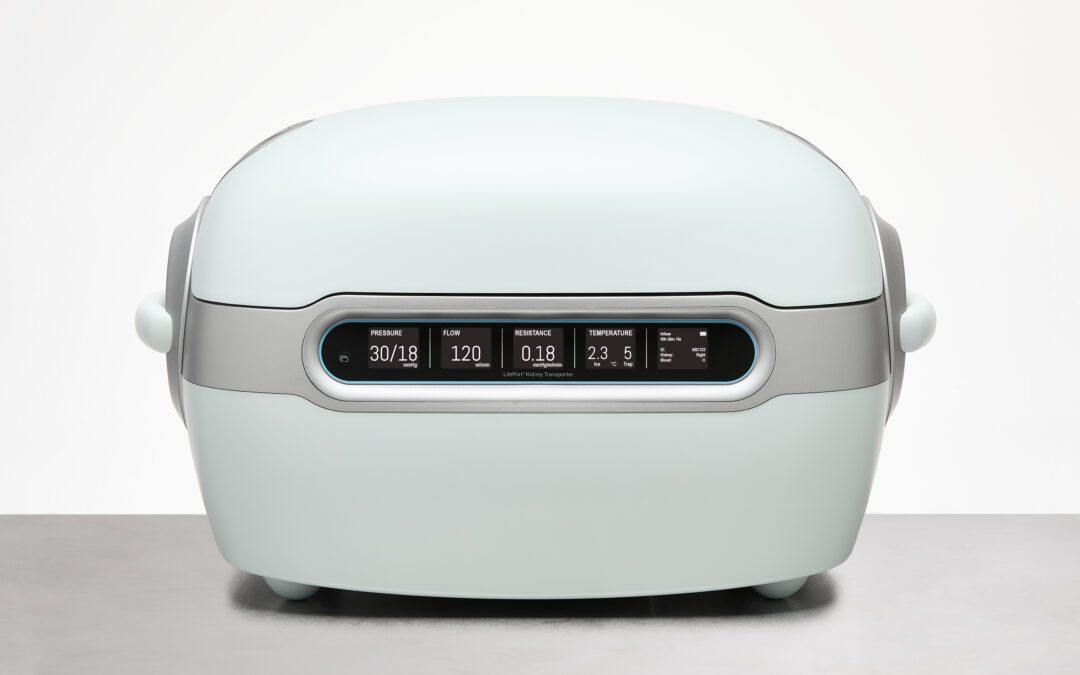
Adapted from Vietnam+’s article
Hue Central Hospital has just successfully performed the first kidney transplant in the country using a continuous hypothermic kidney preservation machine, marking a new historical milestone in Vietnamese medicine.
On the afternoon of October 24, Hue Central Hospital announced that it had successfully performed the first kidney transplant in the country using a Hypothermic Machine Perfusion (HMP – LifePort Kidney Transporter), marking a new historical milestone in Vietnamese medicine.
The kidney transplant was performed on kidney failure patient Tran Q (born in 1983, residing in Da Nang city). This is the second time the male patient has received a kidney transplant, after the first transplant about 11 years ago.
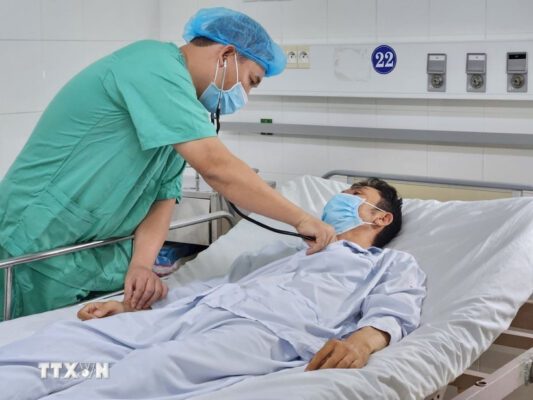
After receiving information from Thong Nhat Hospital (Ho Chi Minh City) that there was a patient donating organs on the evening of October 17, Professor, Doctor Pham Nhu Hiep, Director of Hue Central Hospital, sent a group of doctors to Ho Chi Minh City, coordinated with Thong Nhat Hospital and Cho Ray Hospital to evaluate, support and proceed with the collection of multiple organs, and coordinate with patients waiting for transplants from the National Organ Transplant Coordination Center.
The organ donor was patient Bui Thi PL (born in 1964, Ho Chi Minh City) who was in a deep coma and could not be recovered. Brain death tests were performed according to procedure and the conclusion was reached at 9:00 p.m. the same day.
Doctors from various hospitals performed surgery to remove multiple organs including the heart, two corneas, and two kidneys. One of the kidneys was transported to Hue Central Hospital for transplant to patient Tran Q.
Because the donor patient was old and had comorbidities, the evaluation and selection of the recipient required a lot of time. The team of doctors at Hue Central Hospital decided to use a new method of organ preservation to optimize the function of the transplanted kidney. After being removed from the donor, the kidney was placed on a continuous infusion machine, transferred to Hue city, and continued to wait for tests to evaluate the compatibility between the recipient and the donor.
After receiving suitable evaluation results, doctors at Hue Central Hospital transplanted a kidney to patient Tran Q at 5:00 p.m. on October 18. The kidney donated from an elderly person with three arterial branches feeding after more than 12 hours of cold ischemia has begun to recover its function in the patient’s body.
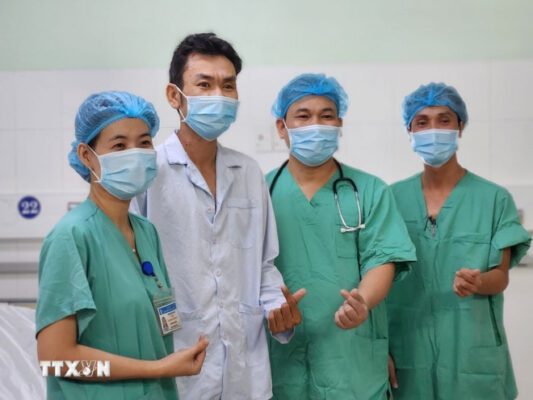
The transplant process lasted 2 hours and 10 minutes with 4 anastomoses (3 arteries and 1 vein). The kidney after reperfusion was rosy, firm, and had urine right on the operating table (1,500 ml in the first 6 hours). At the time of this writing, the patient recovered kidney function quickly, did not need post-operative dialysis, and had no complications or acute rejection. The kidney function gradually improved after the transplant.
According to Associate Professor, Doctor Pham Ngoc Hung, Head of the Department of Nephrology and Urology (Hue Central Hospital), this is the first case of organ transplantation preserved using a new method in Vietnam. Different from the traditional freezing method, the LifePort HMP continuous hypothermic kidney preservation machine allows the organ preservation solution (KPS-1) to be continuously pumped under controlled hypothermic conditions during the transportation from Ho Chi Minh City to Hue.
Thanks to this technology, the kidney donated from a 61-year-old brain-dead donor, in a high-risk group (diabetes, hypertension…) was still optimally preserved and achieved good transplant quality.
A 12-hour cold ischemia time—a national record in the history of organ transplantation—demonstrates the effectiveness of HMP technology in expanding organ allocation gaps and increasing the availability of high-risk organ donors.
Professor, Doctor Pham Nhu Hiep, Director of Hue Central Hospital, emphasized that the kidney transplant using a continuous hypothermic kidney preservation machine not only affirmed the capacity of the Hue Central Hospital team but also showed that Vietnam has mastered the world’s leading advanced organ preservation technology. This is an important technical step forward to help shorten the technology gap, optimize coordination efficiency and improve the quality of organ transplants nationwide.
Since the first kidney transplant in 2001, Hue Central Hospital has performed nearly 300 kidney transplants each year, mastering many complex techniques such as multi-arterial-venous kidney transplants, second kidney transplants, laparoscopic kidney transplants from living donors… especially kidney transplants from brain-dead donors. The unit has performed more than 2,500 organ and tissue transplants, and is one of the few units in the country to master the technique of transplanting the “triple” of heart, liver, kidney and hematopoietic stem cells with an almost absolute success rate.
This affirms the hospital’s position as one of the leading organ transplant centers in Vietnam, bringing confidence and life opportunities to thousands of patients across the country.
The Latest
Check out the most recent posts